LLM failover design guide: recover requests without hiding unsafe retries
A useful failover policy is a closed ladder of approved routes, retryable errors and deadlines. It records every attempt and stops before a reliability feature becomes duplicate tool execution, runaway cost or a silent model substitution. Design the application side and gateway side together because neither layer can infer the other's side effects.
Published 2026-08-15 · Updated 2026-09-29 · KeepRouter Editorial · 5 minute read
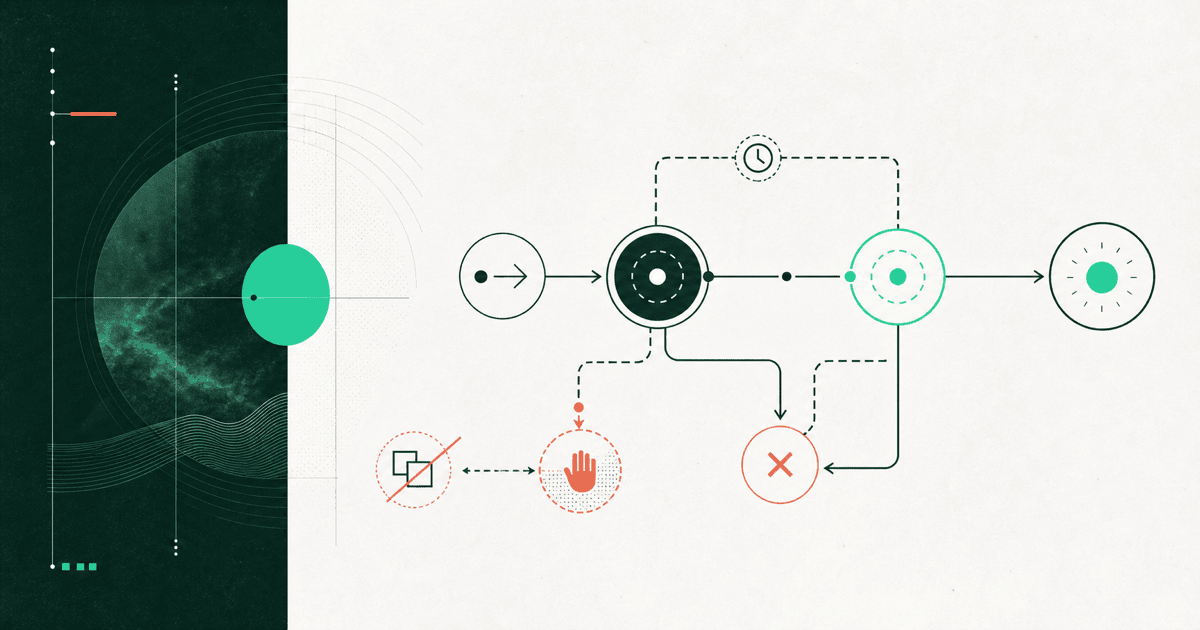
Short answer: failover should recover only the failures your application has classified as safe to repeat. Start with an approved route set, then define retryable errors, per-attempt timeouts, a total deadline, streaming rules, idempotency and cost evidence. Do not let a generic retry policy silently change models or execute a tool twice.
Separate the recovery actions
| Recovery action | Route change | Appropriate when | Main danger |
|---|---|---|---|
| Retry same route | No | A transient network or selected server error may clear | Duplicate tokens and longer deadline |
| Try another provider route | Provider or deployment changes | Equivalent route has passed the same acceptance suite | Region, revision, data policy or cache can differ |
| Fall back to another model | Public model or family changes | Product has explicitly approved different behavior | Quality, tools, safety and price can change |
| Stop and surface error | No further attempt | Failure is permanent, deadline is spent or side effect is uncertain | Lower completion rate, but preserves correctness |
The last option is part of a sound policy. A system that always returns something can be less reliable than one that stops before corrupting state.
Build an error taxonomy from real responses
Collect errors from the exact endpoints and providers you use. Authentication failures, unknown model IDs, unsupported fields and malformed input normally require a configuration or code change. Repeating the request does not alter those facts.
Rate limits, connection resets, selected 5xx responses and timeouts may be retryable. Even then, inspect provider guidance, Retry-After headers and the remaining product deadline. A coding-agent turn can tolerate a different delay from autocomplete or voice interaction.
Store the original error class and every later attempt. Returning only the final 200 makes an unstable route look healthy and hides the cost of recovery.
Budget time across the whole ladder
Set one logical-operation deadline and divide it among attempts. If the client allows 12 seconds, two independent 10-second upstream timeouts do not fit. Reserve time to stream a response and to return a useful error.
Use exponential backoff only where waiting can improve the condition. Backoff after a permanent schema error wastes the entire deadline. Apply jitter when many workers could retry together after a shared outage.
The gateway latency guide shows how to report first attempts and rescued calls separately.
Streaming needs a state machine
Before the first output event, another attempt may be invisible to the user. After partial output, replay can duplicate text or produce a contradictory answer. Track whether the client has received headers, content, a tool call, usage and a terminal event.
Choose an explicit policy for partial streams: stop and return a marked incomplete response, resume only if the protocol and provider support it, or restart as a new user-visible attempt. Do not concatenate output from different models as though it were one response.
Protect side effects at the application boundary
The gateway sees a model request. It usually cannot know whether a generated tool call has already sent an email, charged a card or changed a database row. The application must assign a stable operation ID, store tool state durably and reject duplicate execution.
Require the same tool schema and authorization tests for every fallback model. A weaker model that formats arguments differently is not an equivalent route merely because it speaks the same compatible API.
Reconcile the cost of all attempts
| Cost source | Why it can repeat |
|---|---|
| Input tokens | Every provider receives the prompt again |
| Output tokens | A failed stream may already have generated content |
| Cached input | Cache keys and availability can differ by provider route |
| Gateway request fees | Some products charge by request or plan usage |
| Tool operations | External systems may perform paid or irreversible work |
Attach all attempts to one logical operation, but retain per-attempt model, usage, status and charge. Product teams need the total; platform teams need the route detail. The cost-control article explains this attribution model.
Example: two retries at two layers become nine attempts
Suppose an SDK permits two retries after its first attempt, and the gateway independently permits two retries for each incoming request. The application can produce 3 × 3 = 9 downstream attempts for one logical task. That is arithmetic, not a measured KeepRouter behavior. Select one retry owner or enforce a shared total budget. When testing Cloudflare request handling or another gateway's retry controls, include the client's settings in the test. Never replay a payment or other side-effecting tool merely because the model connection failed.
Run the failure matrix before production
- Reject invalid auth and confirm there is no retry.
- Send an unsupported parameter and confirm the policy stops.
- Simulate a rate limit with and without
Retry-After. - Delay the first byte past the attempt timeout.
- Interrupt a stream before and after partial content.
- Fail after a tool call is proposed and after a tool result is returned.
- Exhaust the total deadline and inspect the client error.
- Compare request records and billing evidence for every attempt.
- Disable the primary route and prove the rollback control.
Start with what LLM API failover means, then document the final policy beside the routing configuration. The policy is a production contract, not a hidden gateway default.
Frequently asked questions
Should every 5xx response be retried?
No. Use provider guidance, endpoint behavior, remaining deadline and side-effect state. Some server errors are persistent.
Can failover switch models?
Only when the product explicitly allows it and the fallback passed the same task, tool, safety and cost checks.
How many attempts are safe?
There is no universal count. Bound attempts by the user deadline, retryable condition, side-effect risk and total cost ceiling.
What should be logged for failover?
Record one logical operation ID plus every attempt's route, model, error, timestamps, usage, charge and final state.
Sources reviewed
Article last reviewed 2026-09-29
- [1] Cloudflare AI Gateway request handling
- [2] Cloudflare AI Gateway dynamic routing
- [3] Vercel AI Gateway provider options
- [4] OpenRouter provider routing