Compare Claude Code model costs without a static price snapshot
A useful Claude Code cost comparison holds repository state and task constraints constant, then compares endpoint eligibility, current rates, measured usage, outcome, and charge.
Published 2026-07-05 · Updated 2026-09-29 · KeepRouter Editorial · 3 minute read
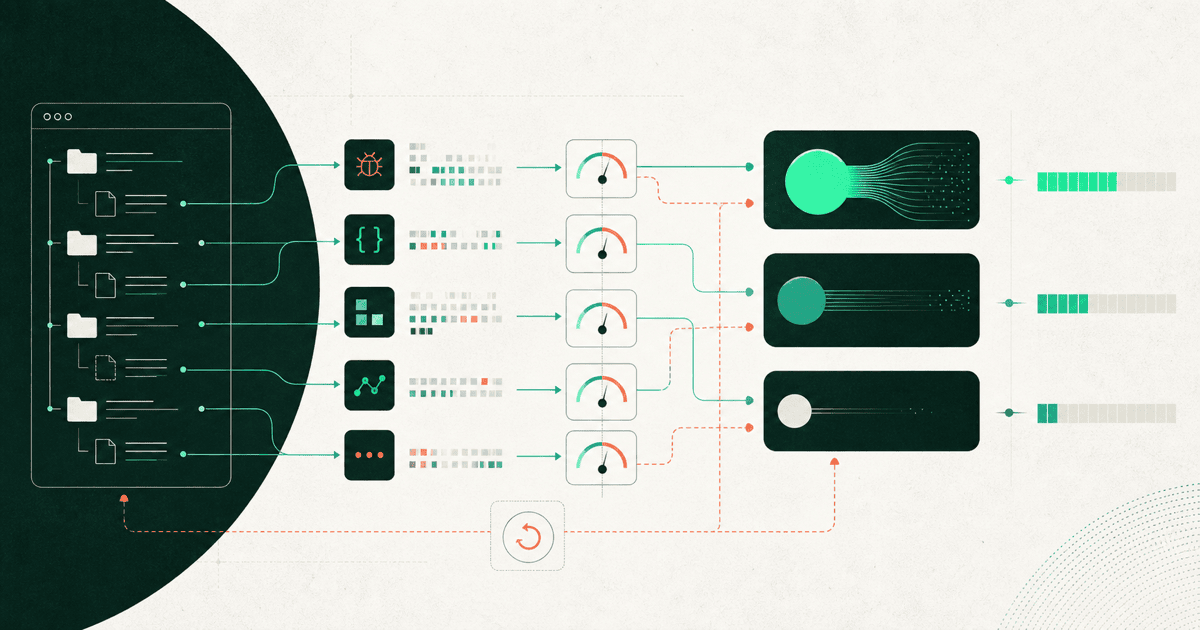
Short answer: compare Claude Code model costs by running the same representative repository task through model IDs that currently accept Anthropic Messages requests, then inspect measured tokens, outcome, and charge. Do not rely on a stale price table or a generic claim that one model is always cheaper.
Connect Claude Code
Claude Code uses the Anthropic Messages format. Set the KeepRouter base URL and API key:
export ANTHROPIC_BASE_URL=https://keeprouter.com
export ANTHROPIC_AUTH_TOKEN=sk-kr-your-key
Run claude as usual, then switch models inside Claude Code with /model <id>.
Compare the same five facts
| Fact | Where to verify it | Why it matters |
|---|---|---|
| Endpoint | Current model detail and OpenAPI | The ID must accept Anthropic Messages requests |
| Rate | Current model detail | Stored price snapshots become stale |
| Eligibility | Current account and key scope | A listed model may still require account access |
| Measured usage | Response and request record | Repository context and response length change token use |
| Task result | Your structural and quality assertions | A cheaper failed result can require another call |
The model catalog is the current source for model IDs, endpoints, account eligibility, and customer rates. Candidate detail pages such as Claude Sonnet 4.6 and DeepSeek V4 Pro are places to verify the current route; their presence here is not a recommendation or a claim that either model passes your task. This article does not preserve a price table, rank models, or promise a savings multiple.
Keep the comparison reproducible
Use the same repository commit, working-tree state, prompt, allowed tools, timeout, output expectation, and environment for each run. Record the model ID, date, input units, output units, cache units when defined, status, charge, attempts, and assertion result. If a tool writes files or contacts an external system, replace it with an inert fixture or make the action idempotent before testing retries.
An executable worksheet can be as small as:
- [ ] Freeze the repository SHA and sanitized task prompt.
- [ ] Select only IDs whose current model pages list the Messages endpoint.
- [ ] Use separately scoped keys when testing access boundaries.
- [ ] Run a non-destructive task once per candidate before repeating trials.
- [ ] Store raw usage and request IDs, then normalize units for comparison.
- [ ] Reject outputs that fail the same acceptance assertions.
- [ ] Recheck the live model page immediately before a production decision.
For broader controls, read how to control multi-model API costs. It separates key scope, input/output bounds, retries, attribution, alerts, and billing reconciliation.
Boundary: the client format does not make models equivalent
Claude Code can send the same Anthropic Messages-shaped request to different compatible IDs, but those models can differ in tool behavior, context handling, output length, latency, and task quality. Compatibility is the entry condition for a test, not the conclusion. Use evidence from your own repository and never turn a small experiment into a universal model ranking.
Compare a completed patch, not just a conversation
Take a small bug with a failing regression case and give each candidate the same clean repository state. Count a success only when the fix passes that case without introducing a relevant regression. Record attempts, total input and output, elapsed time and review effort. A cheaper conversation that needs a manual rewrite is a different outcome. Use the Claude Code setup for KeepRouter configuration; Anthropic's Messages reference describes the underlying message format, not third-party model quality.
Start with a key
New accounts can use the create-key action below and then follow the quickstart. For Claude Code-specific environment variables and limitations, use the Claude Code setup guide. Eligibility is dynamic, so verify the console before the run.
Frequently asked questions
Can I compare Claude Code models from published prices alone?
No. Current rates are one input. You also need endpoint eligibility, measured tokens, retries, and whether the result passes the same task assertions.
What must remain constant in a comparison?
Keep the repository state, prompt, tools, timeout, output expectation, and environment constant, then record model-specific usage and outcomes.
Sources reviewed
Article last reviewed 2026-09-29
- [1] Anthropic Messages API
- [2] Anthropic Claude Code documentation
- [3] KeepRouter model catalog
- [4] KeepRouter Claude Code guide