Doubao multimodal embeddings: build a small image-and-text retrieval test
A multimodal embedding request can combine text and images into a representation for retrieval. The important engineering decision is what one vector represents: one document, one image, or one deliberately combined item. Validate that boundary before indexing a collection.
Published 2026-09-23 · Updated 2026-09-29 · KeepRouter Editorial · 5 minute read
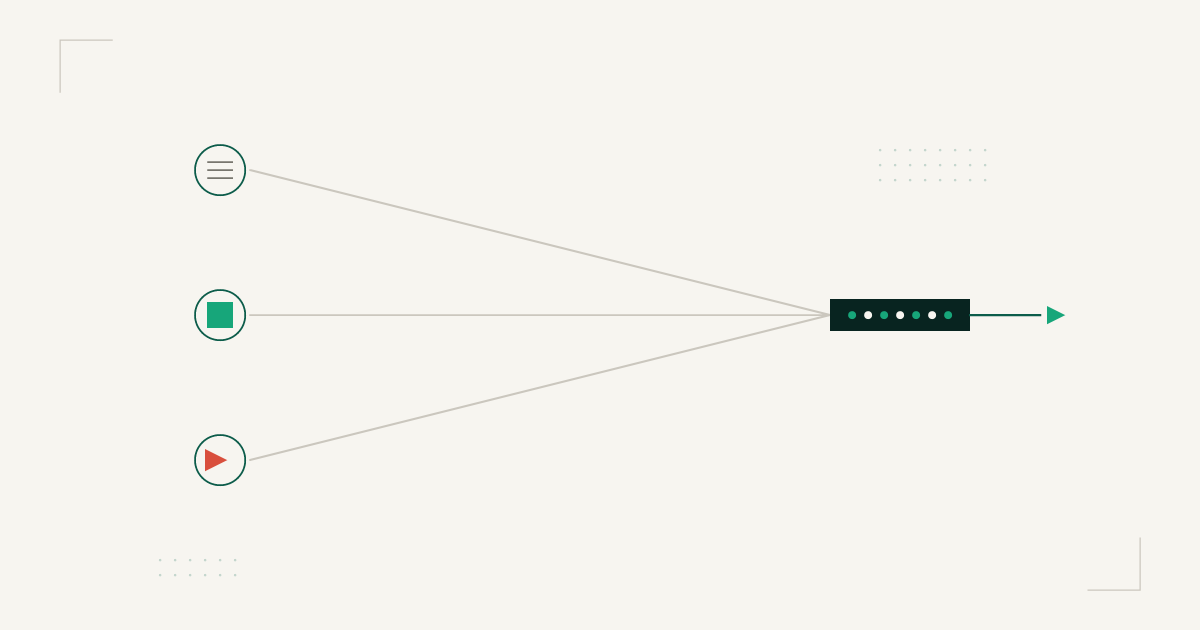
The Doubao multimodal embedding route is useful when a text query needs to retrieve an image, or a mixed item needs one searchable representation. The first implementation question is how to define an item. If a product photograph and its description belong together, they may be one input. Ten unrelated photographs should not accidentally become one vector because they were put into the same input array.
KeepRouter lists Doubao Embedding Vision 251215 under its dedicated multimodal embeddings operation. Volcengine's vectorization documentation describes the upstream model family and version-specific options. This walkthrough concentrates on the ordinary dense-vector path. It does not claim that optional sparse, compressed or multi-vector features work unchanged through every gateway route.
Define the retrieval experiment before calling the API
Create a small collection of media you control. For example, choose twelve product images with short factual descriptions and write eight queries whose intended results you can identify manually. Include two difficult pairs: visually similar objects with different functions, and differently photographed objects with the same function.
Keep an item ID, source URL, description and expected query matches in a local fixture. Do not use the model to invent the expected matches; a retrieval test needs an independent answer key. Decide whether the application should find a broad category, an exact product, or a near duplicate. These goals can favor different representations and evaluation criteria.
| Input design | Vector represents | Suitable first experiment |
|---|---|---|
| One text part | A query or text document | Text-to-text retrieval |
| One image part | One image | Text-to-image retrieval |
| Image plus its description | One combined item | Product discovery |
| Several unrelated images | An ambiguous combined object | Split into separate requests first |
Use the dedicated operation and inspect the vector
The example below makes one paid-model request when run with a valid funded account and an allowed key. It is a template for your own test, not a claim that the request was executed during preparation of this article. The public logo is only a transport fixture; replace it with media appropriate to your retrieval task.
import math
import os
import requests

response = requests.post(
    "https://keeprouter.com/v1/embeddings/multimodal",
    headers={"Authorization": "Bearer " + os.environ["KEEPROUTER_KEY"]},
    json={
        "model": "doubao-embedding-vision-251215",
        "input": [
            {"type": "text", "text": "KeepRouter product logo"},
            {"type": "image_url", "image_url": {"url": "https://keeprouter.com/logo-512.png"}},
        ],
    },
    timeout=60,
)
response.raise_for_status()
body = response.json()
vector = body["data"][0]["embedding"]
if not vector or not all(type(v) in (int, float) and math.isfinite(v) for v in vector):
    raise ValueError("Expected a non-empty finite dense vector")
print({"dimensions": len(vector), "usage": body.get("usage")})
The KeepRouter adapter normalizes a single upstream embedding object into a list-shaped response. That normalization does not guarantee one vector per input part. Read the result and associate it with the combined item you submitted. For independent catalog items, issue independent item requests unless the chosen endpoint documents a batch contract that preserves item boundaries.
Use the API reference to verify the current route. Sending the same model to ordinary /v1/embeddings is a different operation and can be rejected. If a request fails, check model eligibility and the operation before changing the media format.
Store the representation recipe with the vector
Record the public model ID, returned dimension count, input construction, optional instructions, and embedding date. Keep document vectors and query vectors produced by a compatible recipe. Do not mix embeddings from unrelated model versions merely because their array lengths match.
If you adopt an upstream instruction or dimension option, verify its support on the exact route and rebuild the test fixture. A change that improves one query can alter the ordering of other results. Treat a new representation as a new index version so you can compare and roll back without corrupting the existing collection.
For a small experiment, exact cosine comparison is enough if that metric suits the model's documented representation. Check for zero-length vectors and compare arrays of the same dimension. A vector database becomes useful when the collection, filtering requirements and update pattern justify it; it does not repair a poorly defined item or an unsuitable embedding recipe.
Evaluate retrieval separately from request success
For each query, inspect the top few results and record whether the expected item appears. Also record distracting results and cases where a textual description overwhelms the visual signal. Compare image-only items with image-plus-description items while holding queries fixed. The result may show that one representation suits exact product search and another suits category browsing.
An HTTP 200 and a vector of the expected width establish that transport and parsing worked. They do not establish useful retrieval. Avoid publishing a general accuracy score from the twelve-item fixture. Its purpose is to catch integration mistakes and decide which larger, representative evaluation to build next.
Include a deliberately confusing retrieval case
Add two visually similar products with different text attributes and one text match with the wrong image. Ask queries that require the attribute as well as the appearance. Record whether the correct item enters the top-k results, not just whether vectors are returned. The Volcengine vectorization guide is the model-family reference; the KeepRouter sample above defines the route being evaluated. This separates API availability from useful cross-modal retrieval.
Estimate indexing and query costs separately
Index creation scales with the corpus; live queries scale with search traffic. Add re-embedding when images, descriptions or model versions change. For illustration, a collection of 10,000 items refreshed by 5% per month means 500 item updates, not 10,000 mandatory monthly rebuilds. Query volume belongs in a separate row. These are planning assumptions, not observed KeepRouter usage.
Media token consumption cannot be inferred from the character length of its URL. Keep reported usage for representative image sizes and input combinations, then apply current customer rates from the model page. Use the API cost calculator where the selected model's unit is represented; retain any unsupported media-specific category in your own worksheet.
The multimodal embeddings overview explains the endpoint family. Once the small fixture works, grow the collection in stages and compare retrieval quality, ingestion failures, freshness and cost per accepted search. A cheap embedding that consistently retrieves the wrong item creates downstream work rather than a useful saving.
Frequently asked questions
Does each multimodal input part receive its own vector?
Do not assume that. A typed-parts request can describe one combined item. Inspect the documented response and use separate requests for independent items.
Can I use the standard embeddings endpoint?
Use the endpoint published for the exact model. This KeepRouter model uses /v1/embeddings/multimodal.
Should I hardcode the vector dimension from an article?
Validate the returned dimension for your selected model and configuration, then store it with the index version.
Does a valid vector prove useful search quality?
No. Evaluate expected matches and distracting results on representative queries independently of transport success.
Sources reviewed
Article last reviewed 2026-09-29
- [1] Volcengine multimodal vectorization
- [2] KeepRouter Doubao model and endpoint
- [3] KeepRouter OpenAPI